Graham County Dog Registration Information
Service Dogs and Emotional Support Animals in Graham, Kansas
If you’re searching where do I register my dog in Graham County, Kansas for my service dog or emotional support dog, the key thing to know is that “registration” can mean different things. In most cases, what residents are really looking for is a dog license in Graham County, Kansas (sometimes called dog registration), plus guidance on rabies vaccination and local animal control rules.
In Graham County, dog licensing is usually handled locally—most often by the city clerk if you live inside a city (such as Hill City). Meanwhile, rabies enforcement and animal-related public safety issues are often coordinated through county offices such as the Graham County Sheriff and the Graham County Health Department. Service dog and emotional support animal (ESA) status are separate from licensing and are governed by different laws and rules.
Where to Register or License Your Dog in Graham County, Kansas
Because licensing and “dog registration” are commonly managed at the city level in Kansas, the right office depends on where you live in Graham County (inside city limits vs. unincorporated county areas). Below are example official offices residents commonly contact for where to register a dog in Graham County, Kansas, including local licensing and county-level animal/rabies enforcement resources. If your town is not listed, start with your local city clerk or the county contacts listed.
Official Offices (Examples)
| Office | Address | Phone | Hours | What they can help with | |
|---|---|---|---|---|---|
|
City of Hill City — City Clerk
City-level dog licensing (for residents inside Hill City limits)
|
205 N Pomeroy Ave Hill City, KS 67642 |
(785) 421-3438 | Thecityofhillcity [at] gmail.com | Monday to Friday, 8 a.m. to 5 p.m. | Dog license/registration questions, local ordinances, local animal issues within city limits |
|
Graham County Sheriff’s Department
County-level law enforcement; may assist with animal control calls and enforcement coordination
|
410 N. Pomeroy Hill City, KS 67642 |
(785) 421-2107 | Not listed | Not listed | Animal-related safety concerns, stray/dangerous animal complaints (especially outside city limits), enforcement questions |
|
Graham County Health Department
Public health resource; rabies guidance and coordination
|
225 N. Pomeroy Hill City, KS 67642 |
(785) 421-3326 | Not listed |
Monday - Thursday: 8:30am to 12pm; 1pm to 5:00pm Friday: 8:30am to 12pm |
Rabies exposure guidance, public health questions, direction on local rabies requirements and reporting |
Note: If you live in another city within Graham County (or near its borders), your city clerk may be the licensing office for your household. If you’re unsure, start with the Hill City City Clerk (if you live in Hill City) or call the Graham County Sheriff or Health Department for direction to the correct local office.
Overview of Dog Licensing in Graham County, Kansas
What “dog registration” usually means
When people ask where to register a dog in Graham County, Kansas, they are usually talking about obtaining a local license/tag for their dog. In Kansas, this is commonly regulated by city ordinances, meaning the process can vary depending on whether you live inside a city’s limits or in an unincorporated area of the county.
City licensing is common (example: Hill City)
For residents inside Hill City limits, local ordinance requires that owners of dogs over a certain age register annually with the City Clerk and provide a current rabies immunization certificate as part of registration. The ordinance also describes a registration timeline and fees (including an annual fee and a lifetime tag option). This is a typical model for how city-based dog licensing works: the City Clerk issues the registration and tag, and vaccination proof is part of compliance.
County-level role: animal control and rabies enforcement
Even when licensing happens at the city level, county agencies still matter. The Graham County Sheriff is a key public-safety contact for animal-related problems (especially outside city limits or when immediate assistance is needed). The Graham County Health Department is the local public-health office residents can contact for guidance on rabies issues, including what to do after an animal bite or potential exposure and how rabies requirements are handled locally.
How Dog Licensing Works Locally in Graham County, Kansas
Step 1: Identify your local licensing authority
To get an animal control dog license Graham County, Kansas residents typically start by figuring out whether their home is:
- Inside city limits (for example, Hill City): licensing/registration is often handled by the city clerk.
- Outside city limits (unincorporated Graham County): rules may differ, and enforcement/response may involve the county sheriff or other county-designated contacts. If licensing is not handled by your nearest city, call the county offices listed above to confirm the appropriate process.
Step 2: Get (and keep) current rabies vaccination
Rabies requirements are a major driver of dog licensing rules. Many Kansas communities require rabies vaccination for dogs, and local licensing often requires you to show a rabies vaccination certificate before a license is issued. For Kansas-specific guidance, state and veterinary public health resources emphasize that county-level public health is a practical point of contact for local requirements, and the Kansas Department of Health and Environment provides statewide rabies information and technical support to local health departments.
Step 3: Apply, pay the fee, and keep the tag current
Local dog registration typically involves (1) providing owner and dog information, (2) presenting rabies vaccination proof, and (3) paying a fee for an annual license/tag (or other options if offered). Keep the tag current and follow local rules for displaying it on your dog’s collar when required by ordinance.
Common pitfalls (and how to avoid them)
- Assuming “service dog registration” replaces a dog license: It does not. Your dog may still need a local license tag.
- Confusing ESAs with service dogs: ESAs generally do not have public-access rights, and a letter or note does not change local licensing requirements.
- Letting rabies vaccination lapse: If your license requires current rabies proof, an expired vaccine can prevent renewal or cause compliance problems.
Service Dog Laws in Graham County, Kansas
Service dog status vs. a local dog license
A service dog is defined by its trained work or tasks for a person with a disability. Service dog status is a legal classification under disability laws—not a county-issued license. In other words, there typically is no official county “service dog registration” you must complete to make a dog a service dog.
However, service dogs are still dogs. That means local requirements—like a dog license in Graham County, Kansas (if your city requires it) and rabies vaccination compliance—can still apply. If you live in a city with licensing rules, expect to follow the same licensing steps as other residents unless a specific local exemption exists (and you should confirm that with the licensing office).
What businesses and offices may ask (and what they can’t)
In day-to-day life, questions about service dogs usually arise in public places (stores, restaurants, government buildings). Service dog handlers are generally not required to carry “registration papers.” If questions come up, the focus is typically on whether the dog is required due to a disability and whether the dog is trained to perform tasks. A local dog license tag, meanwhile, is about animal control and rabies compliance—not disability status.
Practical tip: keep documentation organized anyway
Even though service dog “registration” is not what creates legal service dog status, it can be helpful to keep the following on hand: current rabies certificate, local license/tag receipt (if applicable), and veterinary records. These help with licensing renewal, housing pet screenings (when allowed by law), travel planning, and emergency vet visits.
Emotional Support Animal Rules in Graham County, Kansas
ESAs are not service dogs (and do not have the same public-access rights)
An emotional support animal (ESA) provides comfort by its presence, but it is not the same as a task-trained service dog. As a result, an ESA generally does not have the same right to enter places where pets are not allowed. If you’re searching where do I register my dog in Graham County, Kansas for my service dog or emotional support dog, it’s important to separate these concepts: local dog licensing is about animal control and rabies compliance; ESA status relates most often to housing-related accommodations.
Local licensing still applies to ESAs
An ESA is still a dog for licensing purposes. If your city requires dog registration, you should plan to obtain and renew a license the same way you would for any pet dog. That means your ESA may still need a local tag and current rabies vaccination proof.
Avoid third-party “registries”
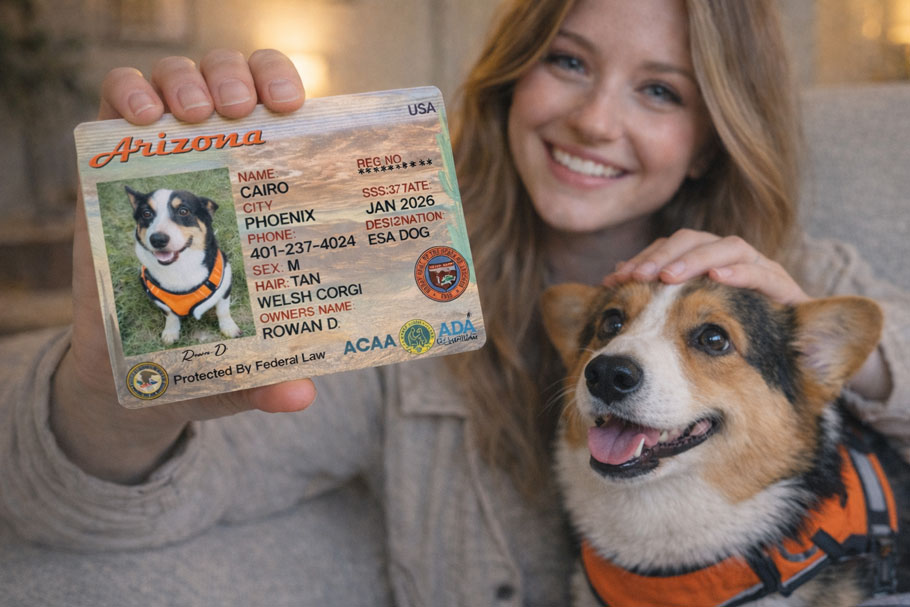
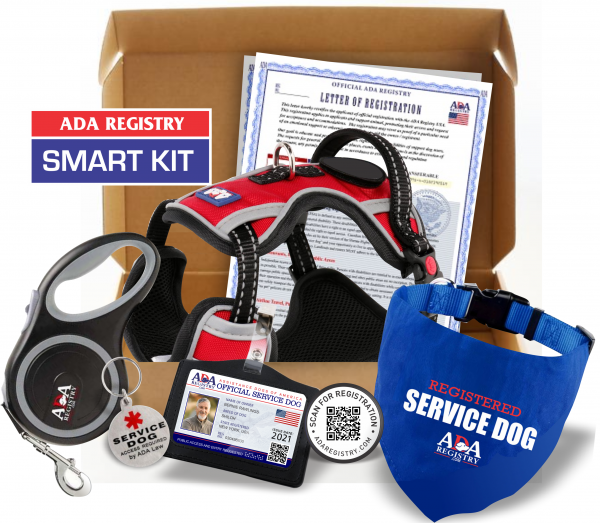
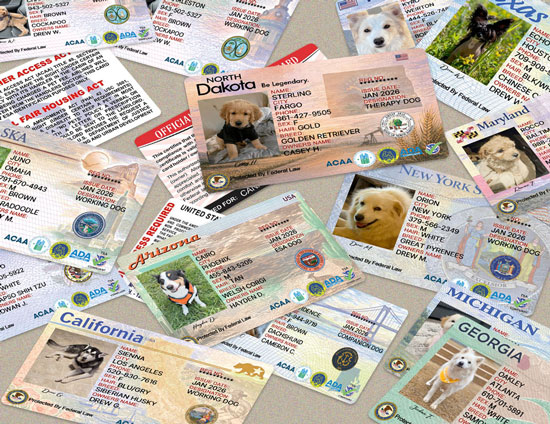
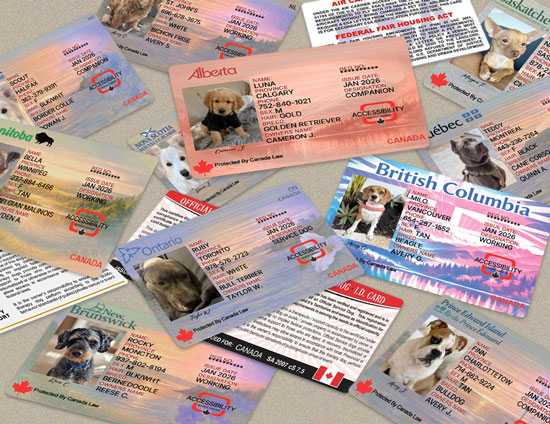
People often encounter websites offering certificates, IDs, or paid “registrations” for ESAs or service dogs. Those services are not the same as a local government dog license in Graham County, Kansas, and they are not usually required to comply with local licensing or rabies rules. For official local compliance, rely on the offices listed in the registration section above.
Frequently Asked Questions
If you’re still unsure where to register a dog in Graham County, Kansas, the fastest path is usually a quick call: start with the office where you pay other local fees (often the city clerk) and ask, “Do you issue dog licenses/tags for my address, and what do you require for proof of rabies vaccination?”
Register A Dog In Other Kansas Counties
Select your county below to get started with your dog’s ID card. Requirements and license designs may vary by county, so choose your location to see the correct options and complete your pup’s registration.
- Allen County Dog Registration
- Anderson County Dog Registration
- Atchison County Dog Registration
- Barber County Dog Registration
- Barton County Dog Registration
- Bourbon County Dog Registration
- Brown County Dog Registration
- Butler County Dog Registration
- Chase County Dog Registration
- Chautauqua County Dog Registration
- Cherokee County Dog Registration
- Cheyenne County Dog Registration
- Clark County Dog Registration
- Clay County Dog Registration
- Cloud County Dog Registration
- Coffey County Dog Registration
- Comanche County Dog Registration
- Cowley County Dog Registration
- Crawford County Dog Registration
- Decatur County Dog Registration
- Dickinson County Dog Registration
- Doniphan County Dog Registration
- Douglas County Dog Registration
- Edwards County Dog Registration
- Elk County Dog Registration
- Ellis County Dog Registration
- Ellsworth County Dog Registration
- Finney County Dog Registration
- Ford County Dog Registration
- Franklin County Dog Registration
- Geary County Dog Registration
- Gove County Dog Registration
- Grant County Dog Registration
- Gray County Dog Registration
- Greeley County Dog Registration
- Greenwood County Dog Registration
- Hamilton County Dog Registration
- Harper County Dog Registration
- Harvey County Dog Registration
- Haskell County Dog Registration
- Hodgeman County Dog Registration
- Jackson County Dog Registration
- Jefferson County Dog Registration
- Jewell County Dog Registration
- Johnson County Dog Registration
- Kearny County Dog Registration
- Kingman County Dog Registration
- Kiowa County Dog Registration
- Labette County Dog Registration
- Lane County Dog Registration
- Leavenworth County Dog Registration
- Lincoln County Dog Registration
- Linn County Dog Registration
- Logan County Dog Registration
- Lyon County Dog Registration
- Marion County Dog Registration
- Marshall County Dog Registration
- McPherson County Dog Registration
- Meade County Dog Registration
- Miami County Dog Registration
- Mitchell County Dog Registration
- Montgomery County Dog Registration
- Morris County Dog Registration
- Morton County Dog Registration
- Nemaha County Dog Registration
- Neosho County Dog Registration
- Ness County Dog Registration
- Norton County Dog Registration
- Osage County Dog Registration
- Osborne County Dog Registration
- Ottawa County Dog Registration
- Pawnee County Dog Registration
- Phillips County Dog Registration
- Pottawatomie County Dog Registration
- Pratt County Dog Registration
- Rawlins County Dog Registration
- Reno County Dog Registration
- Republic County Dog Registration
- Rice County Dog Registration
- Riley County Dog Registration
- Rooks County Dog Registration
- Rush County Dog Registration
- Russell County Dog Registration
- Saline County Dog Registration
- Scott County Dog Registration
- Sedgwick County Dog Registration
- Seward County Dog Registration
- Shawnee County Dog Registration
- Sheridan County Dog Registration
- Sherman County Dog Registration
- Smith County Dog Registration
- Stafford County Dog Registration
- Stanton County Dog Registration
- Stevens County Dog Registration
- Sumner County Dog Registration
- Thomas County Dog Registration
- Trego County Dog Registration
- Wabunsee County Dog Registration
- Wallace County Dog Registration
- Washington County Dog Registration
- Wilson County Dog Registration
- Woodson County Dog Registration
- Wyandotte County Dog Registration